

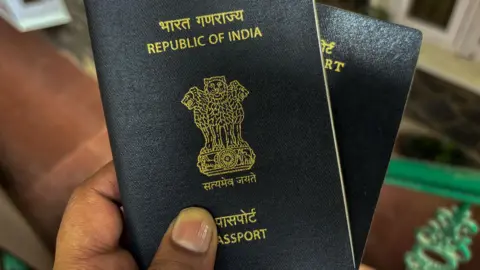
In recent months, a video from an Indian travel influencer expressing frustration over the limited power of the Indian passport went viral on social media.
He mentioned although nearby nations like Bhutan and Sri Lanka offered easier access of travelers from India, obtaining visas for visiting many nations in Europe and the West continued to be difficult.
This dissatisfaction with India's poor passport strength found confirmation in recent Henley Passport Index, which placed the country at position eighty-five among 199 countries, a decline of five positions than last year.
The Indian government have not issued a statement on the report so far.
Countries including Ghana, Rwanda and Azerbaijan with much smaller economies than India – which is the fifth-largest economy globally – hold better positions in the ranking in the seventies range, in that order.
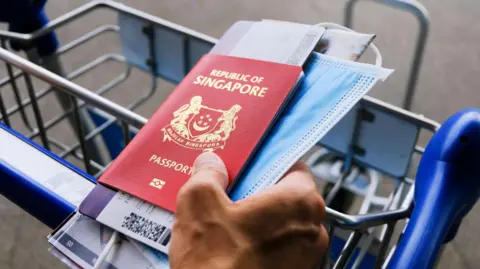
Actually, the country's position over the last ten years has hovered around the eighties, even dipping to the 90th spot two years ago. Such standings appear poor compared to Asian nations like Singapore, Japan and South Korea, which have consistently held leading ranks.
What Passport Strength Measures
Passport strength indicates a country's global influence and international standing. It also translates into enhanced travel freedom for its citizens, improving commercial and learning opportunities. A weak passport results in more paperwork, higher visa costs, fewer travel privileges and longer waiting times for travel.
But despite the decline in the rank, the count of nations offering visa-free access to Indians has grown over the last ten years.
As an instance, in 2014 – the year the current administration's ruling party came to power – 52 countries provided visa-free access for Indian passport holders with the passport ranked 76th in the ranking.
A year later, it tumbled to the 85th position, then rose to eightieth over the past two years, declining once more to the eighty-fifth spot this year. At the same time, countries allowing visa-free travel to Indian citizens grew from fifty-two eight years ago to sixty last year and sixty-two this year.
The Competitive Global Mobility Landscape
The number of nations allowing visa-free entry in 2025 (fifty-seven) is higher than the number in 2015 (52), yet India's rank for both these years remains at eighty-fifth. What explains this situation?
Analysts note that a major reason involves growing competition in international travel – indicating that nations are forming additional travel agreements for their populations' advantage and economic growth. As per recent analysis, the worldwide mean number of destinations travellers are able to access without visas has nearly doubled from fifty-eight nineteen years ago to 109 in 2025.
As an illustration, China has expanded the number of visa-free destinations available to its citizens from fifty to eighty-two in the past decade. As a result, its position in the ranking has enhanced from 94th to 60th during the same time period.
In comparison, The Indian passport – which was ranked at seventy-seventh place in July – fell to the 85th position this autumn after losing access to two countries.
Additional Factors Impacting Passport Power
An ex-diplomat from India notes there are other factors that affect a nation's passport power, like its economic and political stability plus its openness to welcoming citizens from other countries.
For instance, the US passport has dropped out from the top ten and now occupies twelfth place – its lowest ever – because of its more inward-looking approach in world politics.
The former ambassador recalls that during the seventies, Indian citizens had visa-free travel to many Western and European countries, though this shifted following Sikh separatist movement in the 1980s. Subsequent political upheavals have continued to damage the country's reputation as a stable, democratic country.
"Numerous nations are growing increasingly wary of immigrants," he stated. "The country possesses a high number of people migrating to other countries or overstaying their visas affecting the country's reputation."
Factors like how secure of a national passport and immigration processes also play a role to obtaining visa-free access to foreign nations.
Enhanced Security Measures
The Indian passport remains vulnerable to security threats. Last year, law enforcement arrested over two hundred individuals for alleged passport and visa irregularities. The country also has complex immigration processes with lengthy timelines of visa processing.
The former ambassador indicated that technological advances, such as the newly introduced digital passport or e-passport, may enhance safety and streamline immigration. This electronic document includes a microchip holding biometric data, making it harder to forge or tamper with the document.
However, more diplomatic outreach and travel agreements continue essential for enhancing international travel freedom for Indian citizens and consequently, the Indian passport's global position.


